
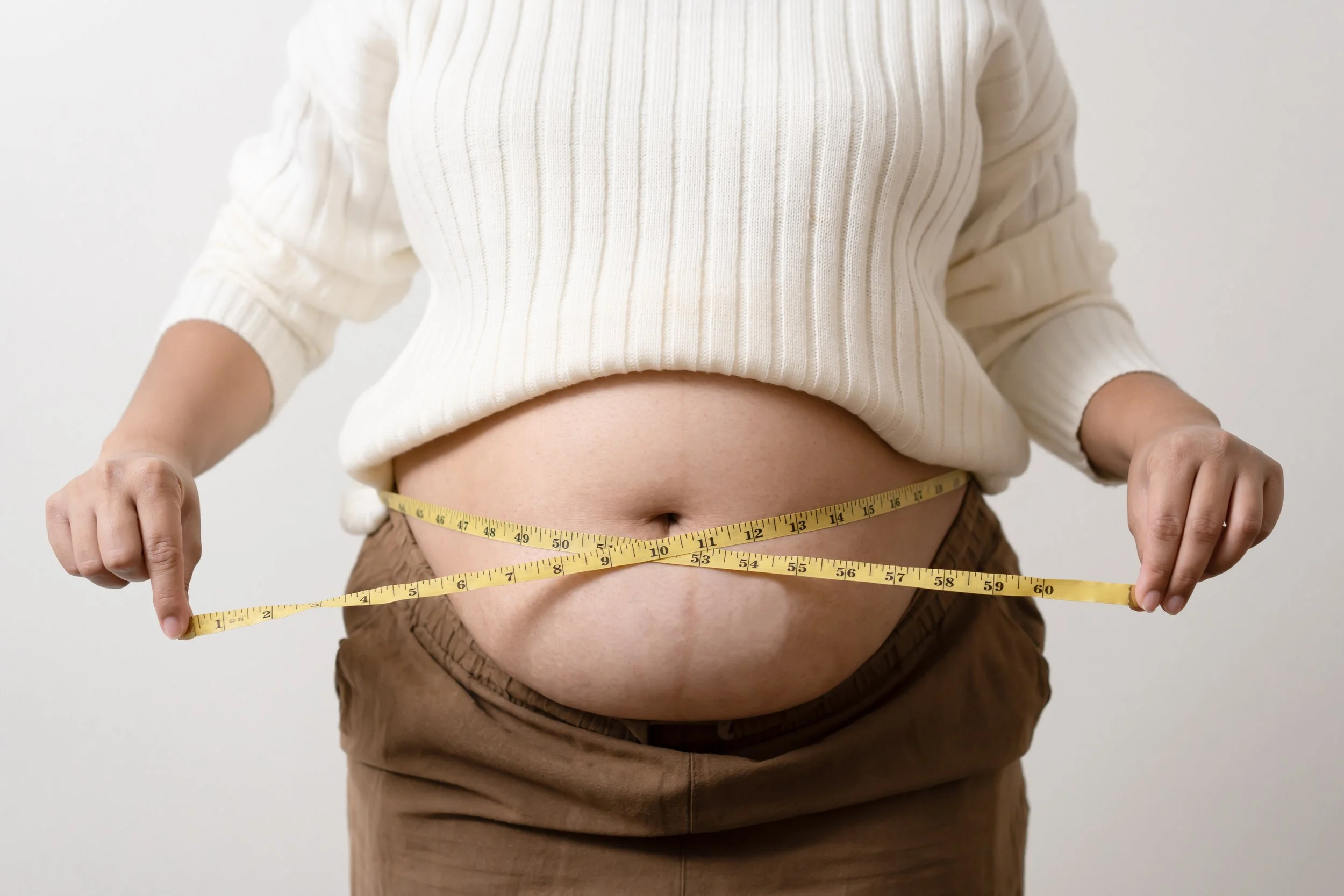
For decades, people have been told that obesity is a simple matter of eating too much and moving too little.“Eat less, exercise more,” they say, as if the human body were a simple calculator.
But after years in medical practice, and countless frustrated patients who did everything “right” yet couldn’t lose weight, I can tell you with certainty: Obesity is not a failure of willpower. It is a hormonal disorder; primarily one of insulin dysregulation.
Let’s explore what that means, how it happens, and what you can do to truly reverse it.
What Is Obesity Really?
Obesity is often defined as having a body mass index (BMI) above 30.
But medically, it’s not just about appearance or body shape. It’s about metabolic imbalance.
When fat accumulates, particularly around the abdomen and internal organs, it becomes metabolically active, producing inflammatory hormones and disrupting the delicate balance of insulin, leptin, ghrelin, and cortisol.
In short: obesity is a state of hormonal chaos, not just excess calories.
Why the “Calorie Model” Fails
For years, conventional wisdom taught that weight gain equals, calories in – calories out.
While thermodynamics is true in physics, it’s incomplete in biology.
If weight were purely mathematical:
Everyone who eats 500 fewer calories daily would lose exactly 0.5 kg weekly.
No one would regain weight after dieting.
Yet real-world experience shows the opposite. Why does this happens? Because our metabolism adapts.
When you restrict calories without addressing hormones, the body slows its metabolic rate, increases hunger hormones, and conserves fat stores.The result? Weight loss plateaus, frustration rises, and eventually the weight returns. Often with interest.
Obesity is not about energy imbalance. It’s about hormonal imbalance, especially involving insulin.
The Insulin Connection: The Master Switch of Fat Storage
Insulin’s job is to move glucose from your blood into cells for energy. But insulin also has another powerful effect. It tells the body to store fat and stop burning it.
When insulin is elevated, your body is in “storage mode.” When insulin is low, your body is in “fat-burning mode.”
Most people today live with chronically high insulin levels because of:
Frequent eating and snacking
High-carbohydrate, high-sugar diets
Hidden sugars in processed foods
Constant stress (which raises cortisol, indirectly raising insulin)
Over time, your cells become insulin-resistant, forcing the pancreas to produce even more insulin.This locks fat away inside cells, making it nearly impossible to lose weight despite eating less.
The Hormonal Web Beyond Insulin
While insulin plays the lead role, several other hormones join the cast:
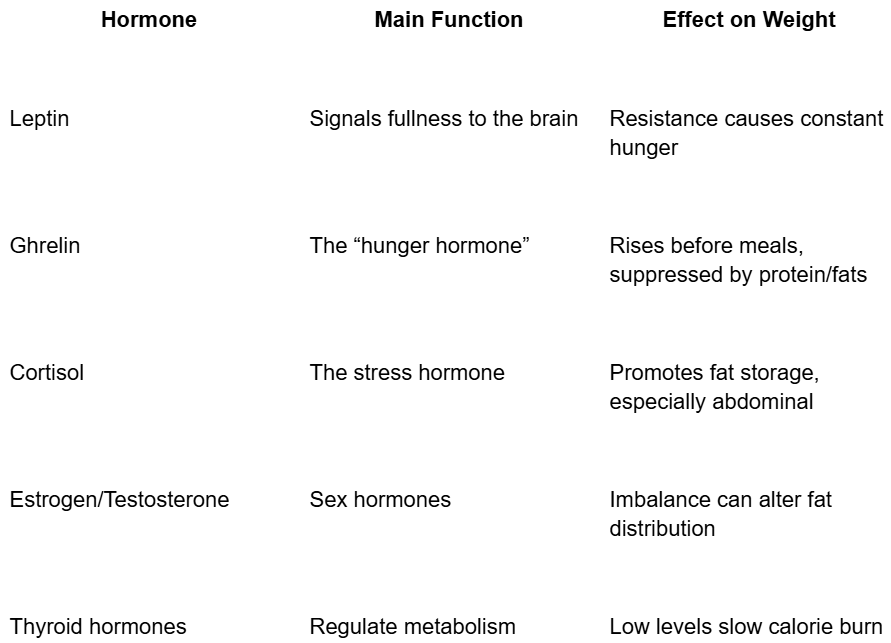
Balancing these hormones naturally through nutrition, sleep, stress control, and meal timing is the foundation of real, lasting fat loss.
Why Diets Fail
Most diets work, temporarily.
Low-fat, low-carb, keto, shakes, detox teas. They all produce short-term results because they reduce food intake.
But if the underlying insulin resistance remains, the body simply finds ways to defend its fat stores. Common mistakes include:
Constant snacking (even on “healthy” foods)
Low-fat processed products that raise insulin
Diet sodas and artificial sweeteners that trick the body into storing energy
Calorie restriction without addressing hormones
Successful weight management requires fixing the hormonal environment, not just counting calories.
The Role of Fasting and Meal Timing
One of the most effective, evidence-based tools for correcting insulin resistance is intermittent fasting.
When you fast, insulin naturally drops.Your body begins to access stored fat for fuel, and growth hormone rises, preserving lean tissue.
Common patterns include:
16:8 – Fasting 16 hours, eating in an 8-hour window
24-hour fasts once or twice weekly
Alternate-day fasting, under medical supervision
Fasting is not starvation; it’s a strategic pause that allows your body to restore balance. For many, it’s the missing piece that finally makes fat loss possible.
The Role of Food Quality (Not Quantity)
Not all calories are equal.100 calories of almonds affect the body very differently than 100 calories of soda.
A healing diet focuses on:
Whole foods over processed foods
Healthy fats (olive oil, avocado, nuts, eggs, fatty fish)
Adequate protein to maintain muscle
Plenty of fiber and vegetables to stabilize glucose
Elimination of refined carbohydrates and sugars
Healthy eating lowers insulin naturally, even if total calories remain the same.
The Hidden Drivers of Weight Gain
Beyond food and fasting, modern life itself promotes obesity:
Sleep deprivation -reduces leptin, increases ghrelin, leading to overeating.
Chronic stress - elevates cortisol, driving cravings and abdominal fat.
Sedentary lifestyle -not only burns fewer calories but reduces insulin sensitivity.
Environmental toxins and endocrine disruptors -chemicals like BPA can interfere with hormones.
Healing requires addressing the whole lifestyle, not just diet.
Obesity and Metabolic Syndrome
Obesity rarely exists alone. It’s often part of a larger cluster known as Metabolic Syndrome, characterized by:
High blood pressure
High triglycerides
Low HDL cholesterol
Elevated fasting glucose
Central (abdominal) obesity
These conditions share the same root: insulin resistance.
Reversing insulin resistance improves them all simultaneously.
What Happens When You Lose Weight the Right Way
When insulin levels normalize:
Fat cells release stored energy
Inflammation decreases
Energy levels rise
Appetite stabilizes naturally
Blood sugar, cholesterol, and blood pressure improve
You are no longer “fighting” your body. You are working with it.
The Emotional and Psychological Side
Obesity is deeply tied to emotion and environment. Many patients eat not from hunger, but from stress, boredom, or habit.
Understanding triggers and building supportive routines is key.Mindful eating, journaling, or professional counseling can help re-align food with nourishment rather than comfort.
Medications, Surgery, and Medical Supervision
Sometimes medical therapy plays a role. Especially for severe obesity or when complications like diabetes and hypertension exist.
Options include:
Metformin or GLP-1 agonists to reduce insulin resistance
Bariatric surgery (gastric bypass or sleeve) for selected cases
However, these are tools, not cures. Long-term success still depends on maintaining hormonal balance through lifestyle.
The Science of Sustainability
Long-term studies show that maintaining weight loss depends on:
Consistent meal timing (no constant grazing)
Quality sleep and stress management
Social support and accountability
Avoiding processed food environments
Regular physical activity (not excessive, just consistent)
Sustainability is not about strict rules. It’s about building a lifestyle you can live with for life.
A New Definition of Health
Health is not about the number on the scale; it’s about metabolic flexibility. It’s about your body’s ability to switch between burning glucose and fat efficiently.
When your hormones are balanced, your weight stabilizes naturally, your energy returns, and your risk of chronic disease drops dramatically.
Finally, If you’ve struggled with your weight, know this: It is not your fault. You’ve been fighting biology with bad advice.The good news is biology can be healed. As a doctor, I have seen patients reclaim their health and confidence. Not by starving themselves, but by restoring the natural rhythm their bodies had all along.
When you lower insulin through mindful eating, fasting, quality sleep, and stress management, the body does what it was designed to do. To restore balance.
Obesity is not a life sentence. It is a reversible condition. Healing begins not with punishment or restriction, but with understanding.
In summary what you should know is,
Obesity is a hormonal, not caloric disorder.
Insulin resistance is the root cause.
Intermittent fasting and whole-food nutrition are powerful tools.
Sustainable health means balancing hormones, not fighting hunger.
Your body can heal, given the right conditions.